
Independent Music Licensing and Royalties: A Guide for Independent Artists

Introduction
Independent Music Licensing and Royalties can be a complex process for independent artists to navigate. Understanding the ins and outs of this realm is crucial for independent musicians who seek to both protect their creative work and maximize their earnings. In this comprehensive guide, we will delve into the intricacies of independent music licensing and royalties, providing valuable insights and practical advice for artists aiming to thrive in this dynamic landscape.
1. What is Music Licensing?
Music licensing refers to the process of granting permission for the use of copyrighted music. It ensures that artists and creators are appropriately compensated for the use of their work. When you license music, you obtain the legal rights to use it in various contexts, such as films, commercials, YouTube videos, and more. Understanding music licensing is crucial for both music creators and those seeking to use music in their projects.

1.1. Exploring Different Types of Music Licenses
There are various types of music licenses that grant different permissions for the use of music. Understanding these licenses will help you determine which one suits your needs:
- Sync License: A sync license allows you to synchronize music with visual media, such as films, TV shows, advertisements, or online videos.
- Performance License: A performance license is necessary when music is publicly performed, such as in live concerts, radio broadcasts, or streaming platforms.
- Mechanical License: A mechanical license is required for reproducing and distributing music, such as releasing it on CDs, vinyl, or digital formats.
- Print License: A print license allows you to reproduce and distribute sheet music or music notation in physical or digital formats.
1.2. Key Players in the Licensing Process
Several key players are involved in the music licensing process. Understanding their roles can help you navigate the licensing landscape:
- Artists and Copyright Holders: These are the creators and rights holders of the music who grant permission for its use.
- Music Users: Music users are individuals or entities seeking to use music in their projects, such as filmmakers, advertisers, or content creators.
- Music Licensing Companies: These companies specialize in facilitating the licensing process by connecting artists and music users, handling negotiations, and managing royalties.
- Performance Rights Organizations (PROs): PROs collect performance royalties on behalf of songwriters, composers, and music publishers for public performances of their music.
2. Understanding Music Royalties
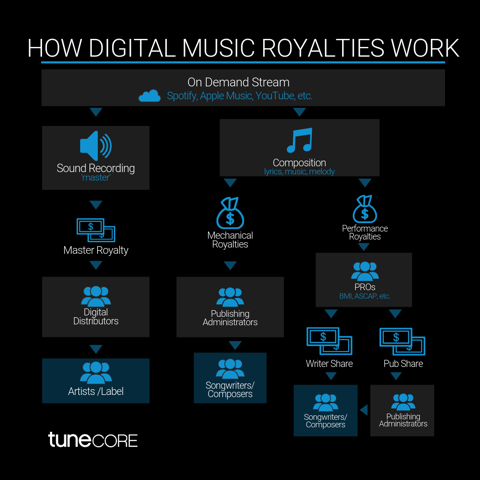
Understanding how music royalties work is crucial for musicians and creators. Royalties are the payments artists receive for the use of their music. There are different types of music royalties, each representing a specific aspect of music usage and distribution.
2.1. Mechanical Royalties
Mechanical royalties are earned when your music is reproduced and distributed in physical or digital formats. This includes sales of CDs, vinyl records, digital downloads, streaming, and interactive streaming. In most cases, mechanical royalties are collected and paid out by organizations such as the Harry Fox Agency (HFA) in the United States.
- Physical Sales: When your music is sold in physical formats like CDs or vinyl records, mechanical royalties are generated based on the number of units sold.
- Digital Downloads: When your music is purchased and downloaded from online platforms, such as iTunes or Bandcamp, mechanical royalties are earned.
- Streaming: Mechanical royalties are generated when your music is streamed on platforms like Spotify, Apple Music, or YouTube Music. The rates may vary depending on the streaming service and the number of streams.
2.2. Performance Royalties
Performance royalties are earned when your music is publicly performed. This includes live performances, radio airplay, TV broadcasts, and streaming services. Performance rights organizations (PROs) such as ASCAP, BMI, and SESAC are responsible for collecting and distributing performance royalties to their member artists.
- Live Performances: When your music is performed live in venues such as concerts, clubs, or festivals, performance royalties are generated. These royalties are typically collected by PROs and distributed to the rights holders.
- Radio and TV Broadcasts: When your music is played on terrestrial or satellite radio stations or featured on television shows, performance royalties are earned. PROs monitor and track these broadcasts to ensure proper compensation for artists.
- Streaming Services: Performance royalties are also generated when your music is streamed on platforms like Spotify, Apple Music, or Pandora. PROs negotiate licenses with these streaming services and distribute royalties to artists based on usage data.
2.3. Sync Licensing and Synchronization Royalties
Sync royalties are earned when your music is synchronized with visual media, such as films, TV shows, commercials, video games, or online videos. Sync licensing offers opportunities to have your music reach wider audiences and generate additional revenue streams.
- Film and TV: When your music is licensed for use in films, television shows, or documentaries, sync royalties are generated. These licenses are typically negotiated with the production companies or through sync licensing agencies.
- Commercials: Sync royalties can be earned when your music is featured in advertisements or commercials. Ad agencies or production companies usually handle the licensing process for commercial sync placements.
- Video Games and Online Videos: Sync royalties can also be generated when your music is used in video games, YouTube videos, social media content, or other online platforms. This type of licensing often involves partnerships with game developers, content creators, or licensing platforms.
2.4. Print and Sheet Music Royalties
If you write sheet music or music notation, you may earn print royalties music royalties. These royalties are generated when your compositions are printed and sold in physical or digital sheet music formats. Print music royalties are typically collected and distributed by music publishers or specialized print licensing organizations.
- Physical Sheet Music: When physical copies of your sheet music are sold, print music royalties are earned. This includes printed books, folios, or individual sheet music arrangements.
- Digital Sheet Music: With the rise of digital sheet music platforms and online marketplaces, composers can earn royalties when their sheet music is sold digitally or accessed through subscription services.
2.5. Neighboring Rights Royalties
Neighboring rights royalties are related to the rights of performers and recording artists. These royalties are generated when your recorded music is publicly performed or broadcasted, such as on radio, TV, or in public venues. Neighboring rights organizations collect and distribute these royalties to performers and recording artists.
- Public Performances: When your recorded music is played on radio stations, TV broadcasts, or in public venues, neighboring rights royalties are generated.
- Broadcasting: Royalties are earned when your music is broadcasted on radio or television networks, including terrestrial, satellite, and online platforms.
- Live Performances: Neighboring rights royalties can also be generated from live performances of your recorded music, such as concerts or festivals.
- Collective Management Organizations (CMOs): Neighboring rights organizations, also known as CMOs, collect and distribute these royalties to performers and recording artists based on usage data and performance monitoring.
Understanding these different types of music royalties is essential for navigating the music industry and ensuring you receive fair compensation for your creative work.
3. How to License Your Music as an Independent Artist
As an independent artist, licensing your music can open up opportunities for exposure and revenue. Here are some key steps to help you navigate the music licensing process:

3.1. Registering Your Music with Performance Rights Organizations (PROs)
Registering your music with PROs is essential for collecting performance royalties. PROs act as intermediaries between artists and businesses that use music, ensuring you receive proper compensation. Some popular PROs include ASCAP, BMI, and SESAC.
- Research PROs: Explore different PROs and understand their membership requirements and benefits.
- Join a PRO: Choose a PRO that aligns with your goals and register as a member.
- Submit Your Works: Register your compositions and sound recordings with the PRO, providing detailed information about your music.
- Monitor Performance Data: Stay updated on your music's performances and ensure accurate royalty collection.
3.2. Working with Music Libraries and Publishers
Music libraries and publishers can help you get your music placed in various media projects. Consider submitting your tracks to reputable music libraries that specialize in licensing music for TV, film, commercials, and other forms of media. Additionally, collaborating with music publishers can provide opportunities for sync licensing and placement.
- Research Music Libraries and Publishers: Look for music libraries and publishers that align with your music style and target audience.
- Submit Your Music: Follow submission guidelines to send your tracks for consideration.
- Build Relationships: Connect with music library curators and publishers to establish relationships and increase your chances of placements.
- Stay Engaged: Continuously create and submit new music to maintain a presence in the licensing industry.
3.3. Direct Licensing and Placement Opportunities
Explore direct licensing and placement opportunities by reaching out to filmmakers, content creators, advertising agencies, and other media professionals. Building relationships and networking within the industry can lead to valuable licensing opportunities.
- Identify Potential Clients: Research and target specific industries or companies that could benefit from licensing your music.
- Reach Out: Contact decision-makers and provide them with samples of your music and licensing information.
- Negotiate Terms: Discuss licensing terms and fees with interested parties, ensuring a fair agreement.
- Keep Records: Maintain records of licensing agreements and track usage to ensure proper compensation.
3.4. Negotiating License Agreements
When licensing your music, it's crucial to negotiate fair and favorable agreements (License Agreement Example). Here are some tips for effective license negotiations:
- Define Usage and Scope: Clearly outline how and where your music will be used to avoid any misunderstandings.
- Set License Duration: Determine the duration of the license, whether it's for a specific project or a longer-term agreement.
- Establish Compensation: Agree on the licensing fees, royalties, or upfront payments you'll receive for the usage of your music.
- Consider Exclusivity: Decide whether the license will be exclusive or non-exclusive, granting rights to one party or allowing multiple licenses.
- Seek Legal Advice: If needed, consult with an attorney experienced in music licensing to ensure your rights are protected.
4. Maximizing Royalty Income for Independent Artists
To maximize your royalty income as an independent artist, it's essential to understand the various strategies and tools available to you. By effectively managing your royalties, you can ensure you're receiving fair compensation for your creative work.

4.1. Understanding Royalty Collection Societies
Royalty collection societies (see list) play a vital role in managing and distributing royalties to artists. These organizations specialize in collecting royalties from various sources and ensuring that artists receive their rightful share. Here are some key points to consider:
- Joining a Royalty Collection Society: Become a member of a recognized royalty collection society in your country or region to ensure your music is registered and monitored for royalty collection.
- Understanding Royalty Distribution: Familiarize yourself with how royalties are distributed, including the calculation methods and payout schedules used by the collection society.
- Stay Updated: Keep track of the latest news and updates from the collection society to stay informed about changes in royalty distribution policies or procedures.
4.2. Effective Metadata Management
Metadata is crucial for accurate royalty collection and distribution. It provides essential information about your music, such as song titles, composers, performers, and copyright details. Here's how you can effectively manage your metadata:
- Consistent and Accurate Metadata: Ensure that your metadata is consistent across all platforms and accurately reflects your music's ownership and rights information.
- Register Your Works: Register your compositions and sound recordings with relevant organizations, such as performing rights organizations (PROs) and music rights databases, to facilitate proper metadata management.
- Utilize Metadata Tools: Take advantage of metadata management tools and platforms to streamline the organization and distribution of your music metadata.
4.3. Tracking and Monitoring Your Royalties
Tracking and monitoring your royalties is essential to ensure you're receiving accurate and timely payments. Here are some tips for effective royalty tracking:
- Utilize Royalty Tracking Services: Consider using royalty tracking services or software that can help monitor and track the usage of your music across different platforms and territories.
- Review Royalty Statements: Regularly review royalty statements provided by collection societies, digital platforms, and licensing agencies to ensure accuracy and identify any discrepancies.
- Organize Royalty Statements: Establish a local system to organize and archive your royalty statements for easy reference and comparison over time.
4.4. Expanding Your Royalty Streams
Exploring additional royalty streams can help diversify your income as an independent artist. Here are some avenues to consider:
- Sync Licensing: Pursue opportunities for your music to be licensed for synchronization in film, TV, advertisements, video games, and other media. This can generate upfront fees and ongoing royalties.
- YouTube Content ID: Utilize YouTube's Content ID system to identify and monetize the use of your music on the platform, ensuring you receive royalties from videos that include your compositions or recordings.
- Direct Licensing: Explore direct licensing opportunities, such as partnerships with businesses, brands, or other creators, to negotiate custom licensing deals and secure additional royalty income.
5. Challenges and Pitfalls to Watch Out For
While navigating the world of music licensing and royalties, there are various challenges and pitfalls that independent artists should be aware of. Understanding these challenges can help you protect your rights and avoid potential issues.

5.1. Copyright Infringement and Unauthorized Use
Protecting your music from copyright infringement and unauthorized use is crucial. Here are some important considerations:
- Register Your Copyrights: Register your original compositions and sound recordings with the appropriate copyright offices to establish legal proof of ownership.
- Monitor and Enforce: Regularly monitor platforms, websites, and media to identify unauthorized uses of your music and take appropriate actions to enforce your rights.
- Consider Legal Assistance: Seek legal advice and assistance if you encounter copyright infringement cases that require legal action.
5.2. Royalty Collection Challenges in International Markets
Expanding your music's reach to international markets can present unique challenges in royalty collection. Here's what you need to know:
- Understanding International Royalty Collection: Educate yourself about the specific royalty collection procedures and organizations in different countries to ensure your music is properly registered and monitored.
- Utilize Global Collection Societies: Partner with global royalty collection societies and agencies that specialize in international royalty collection to streamline the process and maximize your earnings.
- Seek Local Representation: Consider working with local music industry professionals or representatives who have expertise in navigating the specific challenges of international royalty collection.
5.3. Identifying Legitimate Licensing Opportunities
Identifying legitimate licensing opportunities is crucial to avoid scams or deals that offer little to no benefit. Here's what you should keep in mind:
- Research Potential Licensees: Conduct thorough research on individuals, companies, or platforms that approach you for licensing opportunities to ensure they have a reputable track record and genuine licensing intentions.
- Review License Agreements: Carefully review and understand the terms and conditions of any license agreement before granting permission to use your music to protect your rights and ensure fair compensation.
- Consult Industry Professionals: Seek advice from music industry professionals, lawyers, or artist managers who can provide guidance and help you evaluate licensing opportunities.
6. Resources and Tools for Independent Musicians
As an independent musician, it's important to leverage resources and tools that can support your music licensing journey. Here are some valuable resources to explore:

6.1. Performance Rights Organizations (PROs)
Performance Rights Organizations play a crucial role in collecting and distributing performance royalties. Consider engaging with the following PROs:
- ASCAP (American Society of Composers, Authors, and Publishers)
- BMI (Broadcast Music, Inc.)
- SESAC (Society of European Stage Authors and Composers)
6.2. Music Licensing Platforms and Agencies
Explore music licensing platforms and agencies that can help you connect with licensing opportunities and manage your licensing activities:
6.3. Royalty Tracking and Collection Services
Utilize royalty tracking and collection services to ensure accurate and efficient management of your royalty income:
6.4. Education and Training Opportunities
Continuing education and training can empower you with knowledge and skills to navigate the music licensing landscape. Consider the following opportunities:
- Online courses and webinars
- Music industry workshops and conferences
- Recommended Reading
- All You Need to Know About the Music Business by Donald S. Passman
- Music, Money and Success: The Insider's Guide to Making Money in the Music Business by Jeffrey Brabec and Todd Brabec
- This Business of Music Marketing and Promotion by Tad Lathrop and Jim Pettigrew
- Music Law How to Run Your Band's Business by Richard Stim
- Music Publishing The Complete Guide by Steve Winogradsky
Conclusion
Understanding music licensing and royalties is crucial for independent musicians to protect their rights and maximize their earnings. By exploring different types of licenses, working with key players in the licensing process, and leveraging resources and tools, you can navigate the complex world of music licensing with confidence. We thank you for consulting our guide, please subscribe if you would like to be notified as we continue to release helpful blogs, guides, and other content for independent artists.
Experience Professional Mixing and Mastering Services
Visit mixing and mastering services or Contact Us today to discuss your project and request a custom quote.
Rankine Records – Online Mixing and Mastering Services Pricing
Mastering Package $40
- Mastering of One Song
- Loudness Optimization
- EQ Optimization
- Compression Adjustments
- Optimize for Release Format (Streaming, CD, etc.)
- High Quality Delivery
- Secure File Upload
Mixing and Mastering Bundle $150
- Mixing AND Mastering of One Song (Stems)
- Vocal Engineering
- Mixing Package Included
- Mastering Package Included
- Secure File Upload
Mixing Package $125
- Mixing of One Song (Stems)
- Vocal Engineering
- EQ Optimization
- Compression Adjustments
- Effects and Automation
- Stereo Image Enhancement
- Secure File Upload
Looking to elevate the quality of your music? Our professional mixing and mastering services can take your tracks to the next level. Our team of experienced audio engineers and producers will enhance the clarity, balance, and overall sound of your recordings, ensuring they sound their best across different platforms and devices.
With our state-of-the-art equipment and meticulous attention to detail, we deliver polished, professional-grade mixes and masters that capture the essence of your music. Whether you're a solo artist, band, or composer, our services can help you achieve the sonic impact you desire.
Disclaimer: Consult a Professional
Disclaimer: The information provided in this guide is for general informational purposes only and is not intended as legal advice. The music licensing and royalties landscape can be complex and may vary depending on your jurisdiction. If you require specific legal advice or have questions regarding your unique situation, it is recommended to consult a professional legal representative who specializes in music law. They can provide guidance tailored to your individual needs and ensure compliance with applicable laws and regulations.
Love reading, keep reading
Get the latest articles delivered directly to your inbox!